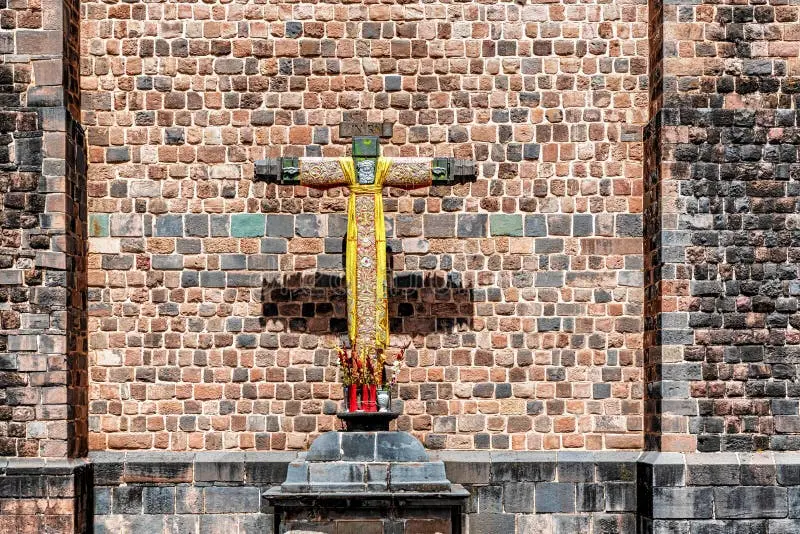
The Qoricancha archaeological site, also spelled Coricancha or Koricancha, was once the most important temple in the Inca Empire. Known as the Temple of the Sun, it held profound religious significance and served as the primary religious center of the empire. Located just a few blocks from Cusco’s Plaza de Armas, this iconic site continues to be one of the most fascinating destinations for travelers interested in Inca architecture, culture, and history.
What Does Qoricancha Mean?
The name Qoricancha is derived from the Quechua words “quri”, meaning “gold,” and “kancha”, meaning “enclosure” or “courtyard.” Thus, Qoricancha translates to “Golden Courtyard“—a name that reflected its once-glittering interior adorned with gold and silver plates.
According to chroniclers, the walls of the temple were lined with sheets of pure gold, and the gardens were filled with life-sized statues of animals and plants made from precious metals. These symbols underscored the site’s role as a center for worshipping the sun god, Inti.
Religious Significance of Qoricancha
Qoricancha was the spiritual heart of the Inca Empire, where priests conducted rituals to honor the sun, moon, stars, and planets. It was believed to be the axis of the universe, from which Inca emperors derived their divine authority.
The Temple of the Sun was used for seasonal ceremonies and offerings, particularly during the Inti Raymi (Festival of the Sun), one of the most sacred events on the Inca calendar. Only the nobility and the high priest, or Willaq Uma, had access to the inner sanctum.
The Inca Temple Layout and Design
The structure is a marvel of Inca architectural genius. Its foundations are built with finely cut and polished stones, tightly fitted without mortar. These stone walls have withstood centuries of earthquakes that destroyed Spanish colonial buildings around them.
Key Sections of Qoricancha:
Temple of the Sun: The central sanctuary, originally sheathed in gold.
Temple of the Moon: Dedicated to Mama Quilla, the moon goddess.
Temple of Venus and the Stars: Honoring celestial bodies.
Temple of the Rainbow: Celebrating the natural phenomenon.
Temple of Thunder: Worshiping Illapa, the god of rain and lightning.
Wall of the Temple: Massive and perfectly cut stones form the defensive outer structure.
These sections reveal the religious center‘s vast complexity and the Incas’ deep connection with cosmology.
The Spanish Conquest and the Church of Santo Domingo
After the Spanish conquest of Cusco, Qoricancha was looted. The gold plates and silver ornaments were stripped and melted down. In an attempt to impose Christianity, the Convent of Santo Domingo and the Church of Santo Domingo were constructed on top of the temple’s foundations. 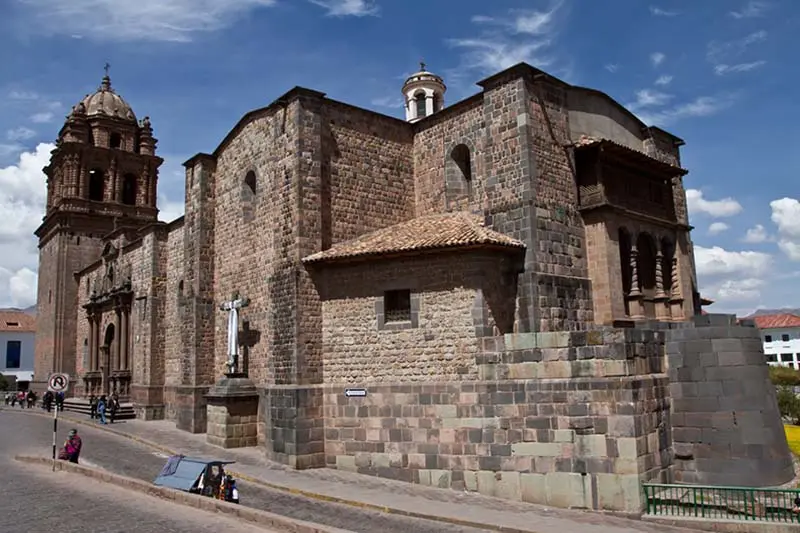
This architectural overlap of colonial and Inca structures provides a stark visual representation of cultural transformation. Today, you can see Inca walls seamlessly supporting Spanish colonial arches.
Qoricancha’s Connection to Machu Picchu and the Inca Road System
As the capital of the empire, Cusco was linked to major archaeological sites via the Inca Trail, including the sacred city of Machu Picchu. Qoricancha served not only as a religious center, but also as a ceremonial starting point for pilgrims journeying to other sanctuaries.
Many researchers believe that Machu Picchu functioned as an astronomical and religious retreat aligned with Qoricancha’s rituals, demonstrating how integrated the empire’s sites were.
Qoricancha as an Archaeological Site Today
Today, Qoricancha remains one of the most studied and visited archaeological sites in Peru. Excavations have revealed underground chambers, water channels, and the remains of temples once buried beneath Spanish structures.
Visitors can explore:
The original Inca foundations.
The colonial architecture of the convent.
A museum featuring Inca artifacts and models.
Solar observatories used for measuring solstices and equinoxes.
Qoricancha represents a living symbol of cultural resilience, showcasing how Inca temples continue to shape Peru’s identity.
When to Visit Qoricancha
The site is open to visitors Monday to Saturday, usually from 8:30 a.m. to 5:30 p.m. The best time to visit is during the dry season (April to October), when Cusco enjoys clear skies and pleasant weather.
If you visit in June, you can witness the Inti Raymi festival, where Qoricancha becomes the ceremonial stage for reenactments of ancient sun worship traditions.
Location and How to Get There
Qoricancha is conveniently located in central Cusco, just a few minutes’ walk from the Plaza de Armas. It’s easily accessible by foot or short taxi ride from most areas of the city.
Entry tickets can be purchased at the entrance or included in the Cusco Tourist Ticket (Boleto Turístico), which also grants access to other major sites in and around the city.
Tips for Visiting
Hire a guide: To fully appreciate the site’s historical layers, guided tours are recommended.
Go early: Arriving in the morning helps avoid crowds.
Dress in layers: Cusco’s weather can change quickly.
Photography: Flash is not allowed inside the museum.
Why Qoricancha Matters
Qoricancha is much more than a historical ruin—it is a testament to the Inca Empire’s spiritual depth, astronomical knowledge, and architectural mastery. As both a religious center and a political symbol, it played a vital role in shaping the cultural and ceremonial heart of the capital of the empire.
Standing within its ancient walls, you’ll experience the power of a civilization that revered the sun god, mastered stone without modern tools, and infused its cities with cosmic meaning. Whether you are exploring Machu Picchu, Plaza de Armas, or the Church of Santo Domingo, no visit to Cusco is complete without discovering the brilliance of Qoricancha.