
Sacred Valley: Explore the Timeless Heart of the Inca Empire
Table of Contents
- 1 What Is the Royal Tomb at Machu Picchu?
- 2 Architectural Features of the Royal Tomb Machu Picchu
- 3 Theories About the Purpose of the Royal Tomb
- 4 Where Is the Royal Tomb Located?
- 5 Connection to Inca Beliefs About Death and the Afterlife
- 6 The Royal Tomb and the Sacred Geography of Machu Picchu
- 7 Visiting the Royal Tomb Today
- 8 Fun Facts About the Royal Tomb Machu Picchu
- 9 The Enduring Mystery of the Royal Tomb Machu Picchu
Hidden within the iconic city of Machu Picchu, the Royal Tomb stands as one of the most mysterious and significant structures. Despite its name, the true purpose of this stone marvel remains debated among archaeologists. However, its architectural sophistication and sacred location suggest that it held an essential role in the spiritual and ceremonial life of the Inca Empire.
In this guide, we will explore the history, symbolism, and fascinating theories surrounding the Royal Tomb Machu Picchu, offering a deeper understanding of one of the citadel’s most enigmatic spaces.
What Is the Royal Tomb at Machu Picchu?
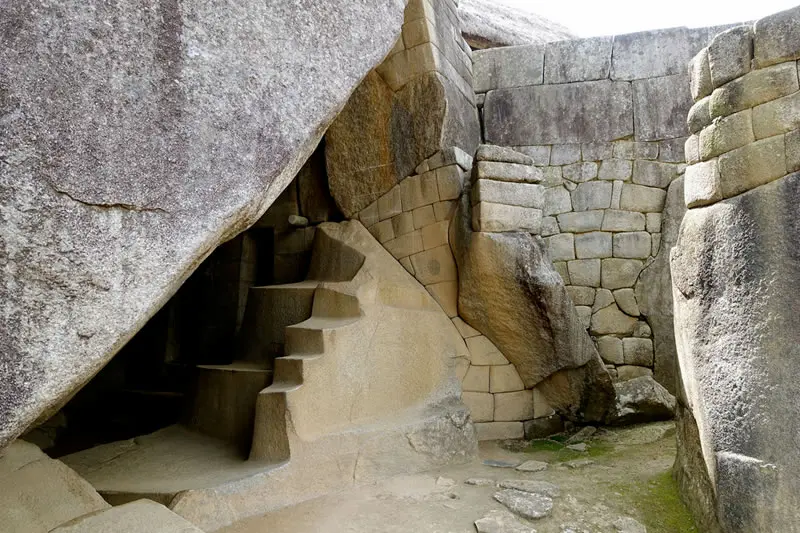
The Royal Tomb at Machu Picchu refers to a finely crafted stone chamber located directly beneath the famous Temple of the Sun. Although no royal remains were found inside, the structure’s intricate masonry, ceremonial niches, and proximity to sacred temples suggest it was a significant ritual space, likely linked to elite Inca burials or spiritual practices.
Often described as a “mausoleum,” this site underscores the importance the Incas placed on death, the afterlife, and the veneration of their rulers.
Architectural Features of the Royal Tomb Machu Picchu
The Royal Tomb showcases some of the finest examples of Inca architecture:
Precision Stonework:
The walls are composed of carefully cut stones fitted without mortar, a signature technique of Inca masons.Ceremonial Niches:
Several trapezoidal niches, believed to hold sacred objects or offerings, are carved into the walls.Staircases and Altars:
Intricate steps and carved platforms suggest ceremonial use, possibly for offerings or ancestral worship.Natural Integration:
The Incas skillfully incorporated natural rock formations into the tomb’s structure, a common practice demonstrating respect for Pachamama (Mother Earth).
The craftsmanship in the Royal Tomb Machu Picchu highlights the importance the Incas attributed to the location and its potential ceremonial use.
Theories About the Purpose of the Royal Tomb
Though called a “tomb,” its exact purpose remains a topic of debate among historians and archaeologists. Several theories attempt to explain its function:
1. Royal Burial Site
Some scholars believe the tomb housed the remains of a high-ranking individual, perhaps an emperor or noble. This theory is supported by the tomb’s proximity to the Temple of the Sun, a religious structure reserved for the most sacred rituals.
2. Ceremonial Center
Others argue that the Royal Tomb Machu Picchu served as a ceremonial space rather than an actual burial site. Rituals to honor ancestors, solar deities, and natural forces might have taken place here, especially considering its alignment with celestial events.
3. Symbolic Space
Another perspective suggests the tomb was a symbolic site representing the journey between life and death — a sacred threshold between the earthly world and the divine realm.
Regardless of its exact use, the tomb undoubtedly held great significance within the Machu Picchu citadel.
Where Is the Royal Tomb Located?
The Royal Tomb lies beneath the Temple of the Sun on the western side of Machu Picchu. As visitors walk along the main religious sector of the citadel, they can spot the tomb’s entrance, blending seamlessly into the surrounding stone structures.
Its strategic location — at the heart of Machu Picchu’s sacred area — reinforces its ceremonial importance.
Connection to Inca Beliefs About Death and the Afterlife
Understanding the Royal Tomb Machu Picchu requires exploring Inca beliefs about death:
Continuation of Life:
The Incas believed that death was not an end but a transition. The soul journeyed to the afterlife, guided by the sun god Inti or the moon goddess Mama Quilla.Mummification and Ancestor Worship:
Elite Incas were often mummified and honored in ceremonies. Their spirits were consulted in matters of state and agriculture.Sacred Geography:
Burial sites were carefully chosen based on sacred landscapes, astronomical alignments, and proximity to important temples.
Thus, if the Royal Tomb was indeed a burial site, it would have symbolized a sacred connection between the dead ruler, the sun, and the earth.
The Royal Tomb and the Sacred Geography of Machu Picchu
Machu Picchu was not randomly built — its layout reflects cosmic and natural principles central to Inca cosmology:
Alignment with Celestial Events:
Structures like the Temple of the Sun and the Intihuatana Stone align with the solstices and the movement of the sun.Proximity to Sacred Mountains:
Peaks such as Huayna Picchu and Machu Picchu Mountain were considered Apus, or mountain spirits, revered as protective deities.
The Royal Tomb Machu Picchu, placed at the intersection of sacred temples and natural formations, fits perfectly into this grand spiritual design.
Visiting the Royal Tomb Today
While visiting Machu Picchu, tourists can observe the Royal Tomb from designated viewing points:
Access:
Visitors are not allowed inside the tomb itself to preserve the delicate structure, but excellent views are available from the surrounding pathways.Photography:
The tomb, with its shadowy entrance and fine stonework, makes for a fascinating photographic subject, especially in early morning light.Guided Tours:
Many tours include the Royal Tomb as part of the exploration of Machu Picchu’s religious sector, offering insights into its mysteries.
Fun Facts About the Royal Tomb Machu Picchu
Despite its grandeur, no royal mummies were found inside when Machu Picchu was rediscovered by Hiram Bingham in 1911.
The tomb’s name “Royal” is traditional but not confirmed by physical evidence.
The natural rock integrated into the tomb mirrors the Inca philosophy of harmony between man and nature.
Some researchers speculate that the tomb may have served astronomical purposes linked to the winter solstice and other key dates.
The Enduring Mystery of the Royal Tomb Machu Picchu
The Royal Tomb Machu Picchu remains one of the most intriguing features of the Inca citadel. Whether it served as a true burial chamber, a ceremonial site, or a symbolic threshold between worlds, its artistry and location speak volumes about Inca beliefs, spirituality, and respect for nature.
Visiting this sacred site allows travelers to glimpse into the deep mysteries that make Machu Picchu not just an archaeological wonder but a living testament to the greatness of the Inca civilization.
In the silent stones of the Royal Tomb, the whispers of ancient rituals and the reverence for life, death, and the cosmos continue to echo — inviting us to connect with a timeless legacy.
Are you ready to live one of the most incredible experiences on the planet?
Machu Picchu is not only a wonder of the world, it is a journey that transforms your soul.
Machu Picchu Tickets, makes your dream of seeing the sacred city of the Incas come true with tours carefully designed for all styles of travelers. Whether you’re looking for an epic hike along the Inca Trail, a scenic train tour or a private getaway, we have the perfect trip for you.
Normally booked 60 days in advance.

